My Chris Young album review for American Songwriter has been quoted on CY’s official website.
Year: 2011
My David Cook review featured on DavidCookOfficial.com
My review of David Cook’s latest album, This Loud Morning has been featured on David Cook’s website.
Chris Young: ‘Neon’
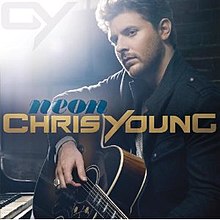
Neon is the third album by 2006 Nashville Star winner and Grammy-nominated country vocalist Chris Young. On the verge of scoring his fourth consecutive number one single with “Tomorrow,” Young, who hails from Murfreesboro, Tennessee, is acutely aware that now is the perfect time to up the musical ante, and it appears he’s done just that. This time out, Young co-wrote seven of the album’s ten tracks with some of the best tunesmiths Nashville currently has to offer, making this his best and most ambitious album yet.
Neon gets kick-started with the fast-paced, sexual innuendo laden “I Can Take it From There,” written by Young, Rhett Akins, and Ben Hayslip. The upbeat ditty comes on strong and immediately sounds like the obvious choice for his next single. “Grab a couple glasses and a bottle of wine/Walk down the hall and turn down the lights/Baby, while you’re at it you might as well let down your hair/And I can take it from there,” sings Young in a deep, throaty, baritone that is 100% genuine country.
Keeping things flowing along in a playfully romantic mood is “Lost,” which was co-written by Young and Brad Paisley’s key songwriting partner Chris DuBois. “No I ain’t got no plan in mind/It’s such a perfect night/So I just thought we could get lost.” The lyrics may not sound like Shakespeare, but they make one hell of a great country hook.
Slowing things down is the previously mentioned romantic ballad and lead off track “Tomorrow,” which is Young’s fastest rising single to date and really highlights the vocalist’s country chops, while demonstrating he can deliver a ballad with both ease and sincerity.
Neon’s pace quickens again with “Save Water, Drink Beer,” which unfortunately follows the current country trend of less than spectacular formulaic beer drinking anthems. Although it sounds a bit unoriginal and redundant, it’s sure to raise a crowd’s energy level during live sets on Young’s upcoming tour.
The album’s title song, written by Shane McAnally with Josh Osborne and Trevor Rosen, is another standout. This mid-tempo number focuses your attention onto the real star attraction of the album, which is Young’s superb voice and undeniable vocal skills. “Neon, the light they always leave on/A weekend on the rocks/An old school jukebox/It’s the buzz I love to be on/The light at this end of the tunnel is neon.” Also not to be missed is the bouncy “You,” co-penned by Young and ace songwriter Luke Laird, which already sounds like it’s destined for country radio playlists and honky tonk dance floors.
David Cook: ‘This Loud Morning’

Okay, let’s forget the American Idol connection for a moment and make a conscious effort to listen to David Cook’s sophomore major label release, This Loud Morning, without prejudice or preconceived notions. After all, Cook wrote and self-produced his indie-debut album Analog Heart before he accidentally became a last minute contestant on the reality talent show. With all biases aside, Cook is an accomplished singer, songwriter, musician, and live performer.
This Loud Morning was recorded in Calabasas, CA and produced by Matt Serletic (Collective Soul, Matchbox Twenty), with six of the twelve tracks mixed at Nashville’s Blackbird studio by Justin Niebank. The album’s theme is loosely weaved around the concept of wanting to escape from overwhelming feelings of hope, love, and heartbreak. This Loud Morning promptly kicks off full of promise with rock-tinged opener “Circadian,” with its dream-like keyboard intro followed by a sequence of heavy piano chords, which slowly builds to a bombastic chorus about wanting to go to sleep and block out the world. “Mayday somebody save me now/And I’m closing my eyes/Because once the sun rises it’s out of my hands,” Cook sings with unbridled conviction before eventually fading out with boys choir-like vocal refrains.
Morning has a much more artistic vibe, combined with a rawness evident in Cook’s vocal performances not found on his previous Rob Cavallo produced release. This is refreshing considering Serletic’s meticulous production style often results in songs becoming trapped in immense layers of over produced schlock. The album includes balanced amounts of strings, piano, and crunchy guitar, which all suit this more mature sounding material. Cook’s more developed lyrics, melodic structures (he co-wrote all 12 tracks), and grittier vocal performances throughout the album abundantly display his overall growth as an artist.
The John Rzeznik co-penned rocker “Right Here with You” is a real winner, as is the mid-tempo “We Believe,” although the latter at times sounds a bit reminiscent of previous hit “Come Back to Me.” However, “We Believe” rocks harder than “Come Back to Me,” and ultimately becomes one of the album’s greater moments. “We believe there’s a reason that we’re all here/that every doubt will disappear/We believe that tomorrow carries something new/And after everything that we’ve been through/We believe,” Cook repeats with optimism throughout the first-rate pop song’s chorus.
The gorgeous “Fade Into Me” has a nice melody, and its sentimental lyrics will surely make it a favorite among Cook’s passionate female fans, but the album’s real knockout is “Take Me As I Am.” This epic ballad, complete with soaring strings, is both emotionally moving and ultra-melodic, and seems to be the obvious choice for the next single. “Take me as I am/right here where I stand/Open up your arms and let me in/Out here on my own/I know I’m not alone/Let me in your heart right where you stand,” Cook demands, in his best vocal performance to date.
Unfortunately, the album’s second half seems to land in a bit of a quagmire. The bounciness of “The Last Goodbye” (co-penned by Ryan Tedder), seems to have been a poor choice as the lead single, given the fact the album is filled with potential hits. And the easily forgettable “Paper Heart” wins the unflattering designation as the album’s one and only bonafide dud.
However, things do recover with the excellent “4 Letter Word,” which is a standout mid-tempo rock ballad despite its clichéd song title, as is “Goodbye to the Girl.” While the latter regrettably gets diluted down by Serletic’s overblown production, we can only hope future live performances will see it reach its subsequent potential.
This Loud Morning offers an irresistible balance of pop and rock to satisfy existing fans and entice new ones to Cook’s musical camp, especially those oblivious to Cook’s season seven Idol win. The album’s closer “Rapid Eye Movement,” is an ambitious six-minute rocker, which ends with the same intro heard in the opening track, making the album sound like an endless musical loop. This technique serves to entice the listener to return to the beginning of the album for repeated spins. While you may be too clever to fall for such a trick, these 12 tracks do indeed seem to get irresistibly better with each repeated listen.
Luke Laird: One of Music City’s Top Songwriters is also an MTSU Alum
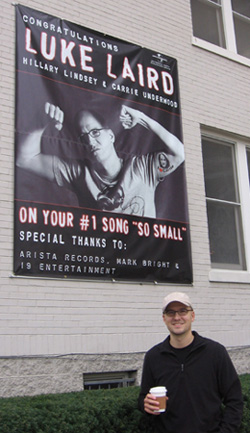
Luke Laird is not merely another MTSU alum success story; he has become one of Nashville’s most prolific songwriters. Laird has already racked up six No. 1 hits, including Carrie Underwood’s “So Small,” Blake Shelton’s “Hillbilly Bone,” as well as Sara Evans’ recent No. 1 song, “A Little Bit Stronger,” which Laird co-wrote with Hillary Lindsey and Lady Antebellum’s Hillary Scott. Laird has also written songs for some of Music City’s top artists, including Kenny Chesney, Rascal Flatts, Tim McGraw, Lee Ann Womack, JoDee Messina, Trace Adkins, Little Big Town, Clay Walker and Amy Grant. In just nine years, Laird’s songwriting career has flourished so quickly, Warner/Chappell Music Senior Director of A&R BJ Hill has coined the phrase “Luke Laird-ing,” when referring to a songwriter’s ability to crank out hit songs down on Music Row.
Recently, The Murfreesboro Pulse was granted an opportunity to discuss Laird’s impressive career achievements. The Middle Tennessee State University graduate offered some interesting insight into his private world of hit songwriting.
Murfreesboro Pulse: How long have you been writing for Universal Music Publishing?
Luke Laird: I originally started writing for BMG in 2002, and then Universal bought them so it’s been almost nine years.
MP: How did you end up at MTSU from Conneaut Lake, Pennsylvania?
LL: I knew I wanted to be in Nashville for music and writing songs and my mom had heard about MTSU’s program from a friend. So we visited it the summer between my sophomore and junior year in high school. I liked it and it was the only college I applied to. I graduated from MTSU in December 2001 with a degree in Recording Industry Management.
MP: At what age did you start writing songs?
LL: I started writing songs as far back as first grade. It just kind of came natural to me when I started playing guitar, especially around third grade.
MP: Who were some of your favorite artists while you were growing up?
LL: I listened to a lot of Top 40, and then when I was in junior high, the whole Garth Brooks thing exploded, and I got into country music. My first concert was Randy Travis. Then on my first trip to Nashville, I went to the Bluebird Café and discovered the whole songwriting scene and that really appealed to me.
MP: After graduating from college, it took two years of playing your songs for Chris Oglesby at BMG Music Publishing. What was that time period like for you, being on the edge of success?
LL: I felt encouraged because he was the first guy who really showed an interest in my songs. But at that point, I felt like I was on the right track, and I continued to write every day to try and get better.
MP: Do you remember where you were the first time you heard one of your songs on the radio?
LL: Yes, I was in the car on the way to a writing session when I heard “So Small” by Carrie Underwood. That was my first No. 1 single and that was very cool.
MP: Let’s discuss your writing process. Does the music or do the lyrics come first for you?
LL: You know it varies. A lot of the times, the music does come first for me. The initial spark will come from a melody while I’m sitting here with my guitar. Every now and then, I’ll write down the idea whether it’s just a title or a concept then I’ll try to decide what kind of feeling I want that to evoke to go with the music. Also, when I collaborate with other songwriters, they will have often have some great ideas too.
MP: Do you have a specific time set aside for writing?
LL: For the most part, I write Monday through Friday. I usually get to my office anywhere from 10 to 11 a.m. Sometimes I’ll get there earlier, but I usually put in a full day at least five days a week.
MP: Where does your inspiration for writing come from?
LL: I guess it often comes from life in general. I’m also influenced by different kinds of music, because I’m always buying lots of new albums, so I’m sure some of that creeps in there. I’m just trying to connect with everyday people, especially when writing country songs. I spend time thinking about how and where I grew up, so I’m influenced by all of those things.
MP: How do you pitch your songs?
LL: Sometimes I record demos that start out with a just scratch vocal while playing everything myself in my own studio, while other times I’ll book a full tracking session and hire some of the great Nashville musicians and record that way before turning them into my publisher. I pitch my own songs a little bit, but I’d rather someone else do that. I prefer to write songs instead of pitching them.
MP: How do you feel when first hearing the metamorphosis of your songs from demo to fully produced end result?
LL: You can’t really describe it. It’s a really great feeling, and it re-inspires me every time to hear something start from nothing to something. It’s cool and makes me want to keep doing it. Sometimes, it turns out sounding a lot like the demo, and other times, it’s a complete surprise. That’s why I try to make my demos sound as good as I can.
MP: Do you prefer to write alone or co-write?
LL: I actually enjoy both, but I mostly co-write since I’ve gotten my publishing deal, because some of my best friends are writers or co-writers. Writing alone takes a lot more discipline and it can be a longer process, but I feel like it’s still good to do because writing by myself makes me a better co-writer.
MP: Did you originally have aspirations to be an artist or did you always see yourself as a songwriter?
LL: When I was younger, I definitely entertained the idea, but I realized early on that being an artist was never really a passion of mine. To be an artist you have to really want to do it and be willing to sacrifice a lot. I enjoy playing a songwriter’s night now and then, but I enjoy the creative side so much more. It takes a special kind of person to pursue a career as an artist, and that was never really my goal.
MP: Do you ever fear your success might suddenly come to an end?
LL: It’s taking a while to achieve this amount of success, and I’m fully aware that it could be here one day and gone the next. I don’t have a lot of fear about that honestly. I feel as long as I continue to work hard, I can be successful and everything will take care of itself.
MP: Have you ever dealt with writer’s block?
LL: I have days where I’m uninspired and nothing much happens, but I think the best way to get through those times is just to keep writing and work through it until I come up with something. When writing is your job, it’s important to have a good work ethic, at least that’s been my experience.
MP: What do you think you would be doing if songwriting wouldn’t have worked out?
LL: Ha! That’s a great question. I’d probably be trying to work in some area of the music business. I actually worked as an assistant tour manager for Brooks & Dunn before I got my publishing deal. So I may have tried to go into management, but I think it all works out if you find what you’re good at and try to excel at it.
MP: Your songwriting résumé reads like a who’s who of country music. Is there one artist in particular you still want to cut one of your songs?
LL: At this point I can’t think of any one artist that I feel would really make my career. I’m just thankful for any artist that has or would want to cut one of my songs.
MP: Do you have any advice for aspiring songwriters?
LL: I think it’s important for anyone who wants to become a songwriter to remember that no matter how many connections they make by networking, or who they get to know, at the end of the day they still have to be able to deliver a great song.
Brad Paisley: ‘This Is Country Music’
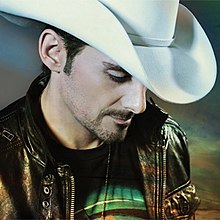
Brad Paisley’s ninth studio album, This Is Country Music, is the most consistent offering from start to finish of his 12-year career. Despite numerous guest appearances (including Don Henley, Alabama, Clint Eastwood, and features duets with Carrie Underwood and Blake Shelton), the fact that Paisley is the star of the show is a true testament to his distinctive musical identity.
Starting off with the first two singles “This Is Country Music” (the previous number two hit), and “Old Alabama” (his Alabama homage and seventeenth number one single), the album immediately lives up to its name. The latter song includes snippets of some of country group Alabama’s best known hits, as well as guest vocals by band members Randy Owen, Jeff Cook and Teddy Gentry, while the title track includes such lyrics as “You’re not supposed to say the word cancer in a song/And telling folks that Jesus is the answer can rub ‘em wrong/But this is country music and we do/So turn it on and turn it up and sing along.”
The album’s tone is set by the two aforementioned hits and continues throughout, as evidenced in the Rivers Rutherford penned “A Man Don’t Have to Die,” where Paisley sings “It’s payments that you can’t make on a house that you can’t sell/See, a man don’t have to die to go to hell,” which is one of only three tracks among the 15 selections not co-written by Paisley.
One noticeable difference between this and previous Paisley albums is a seemingly conscious decision to dial down the gimmicky novelty songs he’s typically associated with, although they do make an appearance on the humorous “Tan,” the witty toe tapper “Toothbrush,” and the tongue-in-cheek duet with Blake Shelton “Don’t Drink the Water.” However, with that being said, the brief comic relief is a welcome and needed element to keep the album’s more serious themes (cancer, foreclosure, and death) in musical balance. Country music doesn’t always have to be a downer, it can also be about fun and having a good time. After all, Paisley has built a career around feel good country anthems, as well as brilliant instrumentals such as the western tribute “Eastwood,” which contains a spoken intro by Clint Eastwood himself. Longtime Paisley producer Frank Rogers helms production duties here, as he does on all of Paisley’s previous musical output; the two make a winning team without becoming predictably formulaic.
This Is Country Music wraps with the southern gospel hymn “Life’s Railway to Heaven” (previously recorded by the Carter Family, Merle Haggard, and Patsy Cline), and features exuberant background vocal harmonies provided by Marty Stuart, Sheryl Crow, and Carl Jackson, which brings the album to its close with Paisley repeating the line from the title song’s chorus, “So turn it on and turn it up and sing along.” Paisley’s latest is not just good country music, but an impressive example of today’s country at its finest.
Ronnie Dunn Releases Solo Album

After ending his successful two decade run as part of country music duo Brooks & Dunn, Ronnie Dunn has released his eagerly awaited solo album, and the result was well worth the 20-year wait. Dunn has dug deeper into his formidable songwriting skills and created an album markedly different than anything found in previous Brooks & Dunn fare.
Helming production duties himself, Dunn also wrote or co-wrote nine of the highly anticipated album’s ten tracks with some of Nashville’s heavyweight writers (Craig Wiseman, David Lee Murphy, and Terry McBride) and Dunn himself has called the album “the most important record of my life.”
Ronnie Dunn kicks off with the upbeat fist-pumper “Singer In A Cowboy Band,” and contains top 10 hit “Bleed Red,” as well as the just released follow-up “Cost of Livin’.” Although his recent contribution to the Country Strong soundtrack “She’s Actin’ Single (I’m Drinkin’ Doubles)” is unfortunately absent, the 12 tracks included are strong enough to make up for that omission. “Sang in every dive and joint in Oklahoma/Been in every hole-in-the-wall from Memphis to Maine/Mama don’t get it, preacher don’t understand/Why I’m a singer in a cowboy band,” Dunn confesses in the album’s opener, which is followed by two superb heartbreak ballads “I Don’t Dance” and “Your Kind of Love.”
The fast-paced “How Far to Waco” is one of many standouts, and includes a dynamic dose of mariachi style horns featured throughout the track as Dunn sings about closing the distance between himself and his beloved. “Only thing on my mind is getting’ back to my baby again/Highway miles they go so slow/She’s waitin’ down the road from El Paso.”
The notable “Once” is an upbeat track about finding that once in a lifetime kind of love, which is the type of song that Dunn does best, and seems destined to become one of the album’s future radio hits. The album’s only low point is the lackluster, run-of-the-mill sounding “Let the Cowboy Rock,” which ironically sounds like it was an outtake from the last Brooks & Dunn album.
Ronnie Dunn is an admirable solo effort and is as rock-solid as any Brooks & Dunn album, which should appease old and new fans alike. Longtime fans of Dunn will undoubtedly deem it worthwhile to seek out the two exclusive iTunes bonus tracks “Boots & Diamonds” and “King of All Things Lonesome.”
Alyssa Carlson: ‘This Side of Innocence’
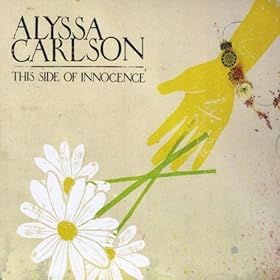
Folk songstress Alyssa Carlson’s independent full-length This Side of Innocence sounds like a midafternoon daydream set to music. The album’s nine tracks are all penned by Carlson herself, with the exception of an exquisite cover version of John Mellencamp’s “Jackie Brown”, which fits in satisfyingly with the rest of the album’s demure sound.
Beginning with opener “Boy From Tennessee”, Carlson’s thin, breathy vocals reveal intimate details of a love gone wrong, but interestingly told from the culprit’s point of view. “I never raised a hand, only an eyebrow/I lied and told her I was with another/Left her crying in the rain,” sings Carlson from her betrayer’s perspective.
The pace quickens on the upbeat “Lonely and the Fool”, which includes a noteworthy harmonica performance by Mando Saenz. “Time was on our side when we wanted to run/The clock was still ticking/I tried to burn a way out,” Carlson confesses during the chorus. Other album highlights include upbeat numbers “The Girl” and “Castle In A Carnival”, but the set’s strongest offering by far is the aforementioned Mellencamp cover “Jackie Brown.”
Carlson’s songwriting skills show promise, but This Side of Innocence is too weighed down by an overabundance of somber, meandering downbeats. Her voice is pleasant but lacking in range or emotional depth, and occasionally becomes wearisome. At times Carlson sounds as if she’s trying not to disturb anyone as she quietly whispers her lyrical revelations.
Putting the few fallacies aside, fans of folk/pop with a slight country flavor will undoubtedly want to give This Side of Innocence a spin to find out if Carlson’s musical style speaks to you personally. The album contains numerous outstanding moments and was impeccably produced by Nashville’s Neilson Hubbard (Don Gallardo, Matthew Perryman Jones). Maybe next time, Carlson could add a little more impulsiveness and diversity into her musical palette and vocal performance.
Go-Go’s: ‘Beauty and the Beat’ (30th Anniversary Edition)

It was during the days of big hair, John Hughes movies, and hanging out at the mall when five feisty beauties called the Go-Go’s became America’s sweethearts. Fronted by lead singer Belinda Carlisle and anchored by key songwriters Jane Wiedlin and Charlotte Caffey, their debut album was an important breakthrough for women in music. The multi-platinum Beauty and the Beat was the first number one album written and performed by an all-female group. It’s now been remastered and expanded into a 2-disc set (and pink vinyl) to celebrate its 30th anniversary.
Beauty and the Beat, one of the 1980s cornerstone albums of American new wave, was both groundbreaking and inspired. Yielding the hits “Our Lips Are Sealed’ and “We Got The Beat,” this seminal recording has never sounded better than here on this new remaster, which manages to breathe new life into these songs no matter how many times you’ve listened to them.
“Can you hear them/They talk about us/Telling lies, well that’s no surprise,” sang Carlisle in “Our Lips Are Sealed,” which could be heard blasting from every car stereo during the summer of 1981. That breakthrough hit was soon followed up by “We Got The Beat,” which became the group’s most successful song and spent three weeks at number two on the U.S. hot 100. The classic 80s anthem’s lyrics “See the kids just getting out of school/They can’t wait to hang out and be cool,” left an indelible impression on pop culture.
The Go-Go’s magic relied on the masterful blending of upbeat melodies, catchy hooks, and background harmonies layered upon sad lyrics, while delivered with undeniable attitude. “Get dressed up and messed up/Blow our cares away/We rule the streets tonite/Until the morning light,” declares Carlisle with energetic angst during the frenetic “Tonite.” Carlisle gets right into your face as she sings “Change the lines that were said before/We’re all dreamers, we’re all whores/This town is our town, it is so glamorous/Bet you’d live here if you could and be one of us,” with an undeniable aggressiveness during the Hollywood ode “This Town.”
This newly released 2-disc set gives fans a chance to hear both sides of the group: the raw energy and post-punk edginess of their live performances never captured on their studio recordings, as well as the smoothed out pop-gloss sound most associated with the band. Disc one is comprised of the full remastered album, while the second disc contains a previously unreleased live concert from 1981. The live disc includes songs that have never appeared on any Go-Go’s album, in addition to an early version of the hit single “Vacation,” complete with alternate lyrics that differ greatly from the well-known recorded version.
The anniversary edition of Beauty and the Beat shows this album still holds up surprisingly well thirty years later, which is a testament to the energetic spirit captured in this musical zeitgeist of the 80s. Unfortunately, it also serves as a reminder that the Go-Go’s were never able to equal or surpass the success of this landmark debut with the band’s subsequent releases. Their beauty may have faded over the years, but their beat still sounds almost as timeless today on this seminal 80s album as it did thirty years ago.
David Cook “The Last Goodbye”

David Cook, winner of American Idol’s season seven, returns to the pop charts with the surprisingly upbeat “The Last Goodbye.” The lead-off single from his major label sophomore effort, This Loud Morning (set to drop on June 28), finds Cook temporarily shedding his serious rocker image on this brief slice of infectious pop, guaranteed to earworm its way into your brain.
Clocking in at just three minutes, this unpretentious ditty doesn’t try to be anything more than a short and bittersweet pop song. Co-written by Cook and One Republic’s pop master Ryan Tedder (known for penning hits for Adele and Leona Lewis), “The Last Goodbye” is certainly nothing ground breaking, but highly irresistible nonetheless. Female fans will find it tantalizing and sentimental, but it rocks enough for guys to like it too.
Its pure pop genius lies in the successful marriage of melancholy lyrics about heartbreak with a particularly ebullient melody. “I didn’t want to lose you/Leave you with a broken heart/But wherever we are, we’re miles apart/I know that we tried, but this is the last goodbye,” sings Cook in the chorus that’s so catchy you will find yourself repeatedly singing it in the shower, whether intentionally or not.
 Welcome to PopMartZoo: My Music Blog and Published Works